A saffron sample can look impressive while leaving a wholesale buyer with important unanswered questions. What product form is being offered? Which batch does the sample represent? What evidence supports the quality description? How will the spice be packed, labelled and protected until it reaches the buyer?
A practical saffron quality checklist turns those questions into a repeatable purchasing process. This guide is intended for food distributors, retailers and ingredient buyers evaluating saffron offers. It focuses on product identity, evidence and order consistency rather than treating colour, origin or a premium-sounding name as proof of quality.
Define the product form and intended use
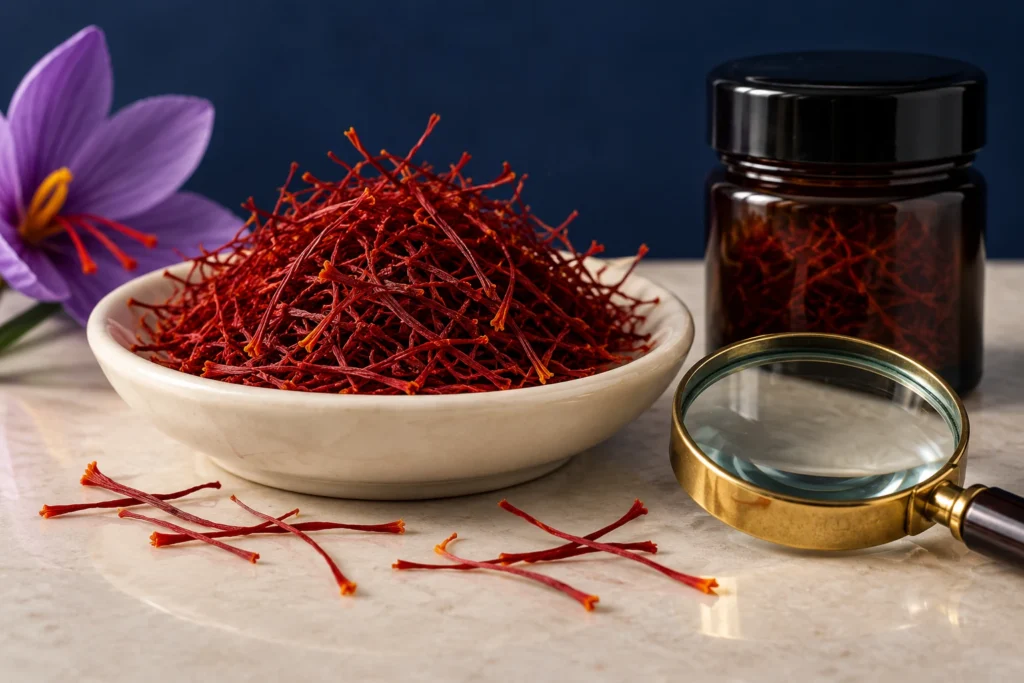
Start by stating whether you need whole filaments, cut filaments or powder. These forms suit different handling and presentation requirements. A retailer may prioritise the appearance of threads in a small pack, while a food manufacturer may need a format that works consistently in a defined production process.
Describe the intended application and pack size. If you need retail-ready goods, specify the unit weight, number of units and label requirements. If you plan to repack the product, explain that separately and confirm the responsibilities for maintaining traceability and product information through your own packing operation.
Keep the purchasing brief specific. “Premium Iranian saffron” does not tell a supplier which form, evidence or packaging you expect. Use an exact product reference and ask for a current written specification covering the characteristics that matter to your business.
Separate commercial names from measured evidence
Commercial names can help describe the presentation of saffron, but suppliers may use terms differently. Ask what the offered name means in measurable or observable terms. Request a photograph and representative sample, then connect both to the written specification.
Do not assume that an origin statement proves a particular quality category. Origin, product form and test results are separate pieces of information. Each should be supported in the way appropriate to the claim and the shipment. Keep the distinction visible when comparing offers from several suppliers.
Use standards precisely
ISO 3632-1:2025 specifies requirements for dried saffron in filament, cut-filament and powder forms. If a supplier references ISO 3632, ask which part and edition are being used and request the relevant evidence. Avoid copying an old edition number from a previous order without checking the current specification.
A statement that saffron is “ISO quality” is too vague to assess on its own. Ask whether the supplier is referring to a test method, a product specification or a certification claim. Those are different statements. Confirm the scope with the laboratory or issuing organisation when the evidence is material to your purchase.
Review the sample systematically
Record the sample’s product name, batch reference, quantity and receipt date. Photograph the packaging before opening it, especially if the seal or condition is relevant. Ask whether the sample was taken from the batch available for sale or is merely representative of the supplier’s usual product.
Assess visible consistency, physical condition and any unexpected material. Use a clean, controlled setting and keep notes so another reviewer can understand what you observed. Appearance can identify questions worth investigating, but it cannot replace appropriate laboratory testing for authenticity or other quality concerns.
Avoid relying on a single informal home test. A colour-release demonstration, for example, is not a complete authenticity assessment. If the order requires analytical verification, agree the tests and acceptance criteria with a competent laboratory rather than treating an online trick as a pass-or-fail method.
Read laboratory documents in context
Check that a report identifies the product and sample, the laboratory, the test date and the methods used. Match its sample or batch reference to the goods being offered. A report for another batch may provide background information, but it does not establish the results for the shipment you are buying.
Ask the laboratory or technical reviewer to explain unfamiliar parameters and units. Colouring strength, aroma-related measurements, moisture and other results need to be interpreted within the applicable method and specification. Do not combine values from different methods as though they were directly interchangeable.
Where authenticity, contaminants or microbiological condition require investigation, define the relevant test scope for the product and destination. A report that covers selected characteristics should not be described as proof that every possible issue has been excluded. Keep the report’s actual scope attached to the purchasing decision.
Clarify dates and usable shelf life
Ask which dates are available and what each one means. Harvest, processing, packing and best-before dates are not interchangeable. If a seller provides only a packing date, do not reinterpret it as the harvest date. Record any date claim exactly and request supporting traceability where needed.
Request the manufacturer’s shelf-life and storage instructions for the offered packaging. Discuss the minimum remaining period you need on arrival, allowing for transport, clearance, warehousing and distribution. The amount of stock you can sell or use within that period should influence the order quantity.
For repeat purchases, retain records of batch dates and observed performance in your intended use. This creates a more useful reference than relying on memory of a previous sample. It also helps distinguish a change in product from a change in storage or handling.
Evaluate packaging as part of quality

Ask how the primary pack protects the spice during storage and transport. Review the closure, material and handling instructions rather than judging the pack only by its appearance. Packaging needs to suit the product and its expected journey, including the conditions in your own warehouse.
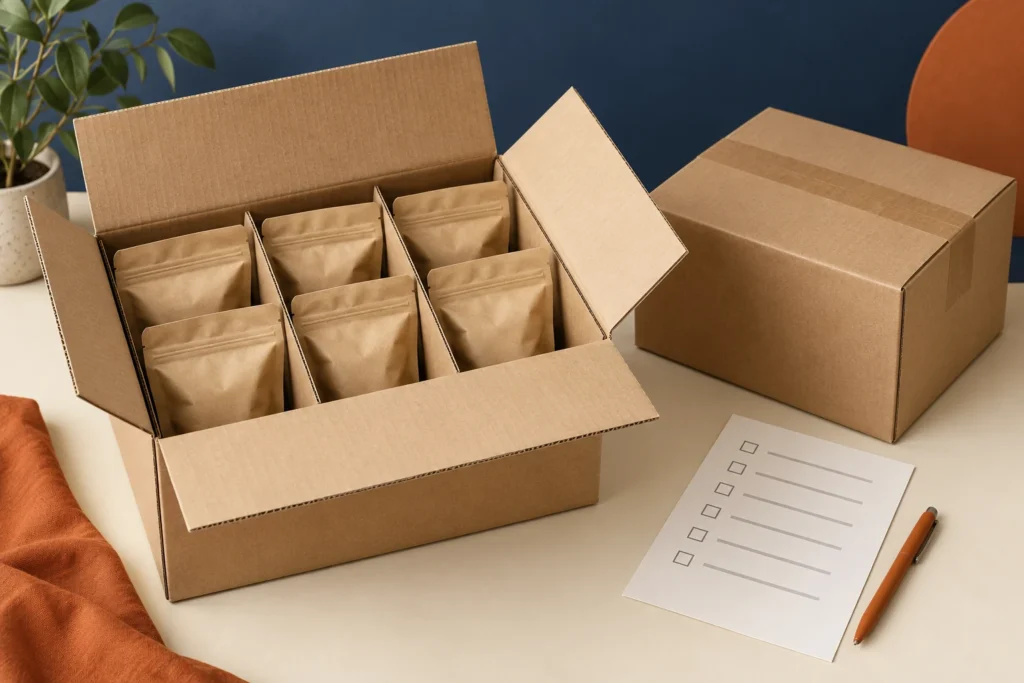
For retail packs, confirm the stated net weight and the number of packs per carton. A decorative outer box may contain a much smaller primary container, so compare the actual product quantity. Ask for the complete packing configuration and clarify which components are included in the quotation.
The saffron product listing on Alami Trade provides a specific catalogue reference for an enquiry. Ask for current availability, the final pack format and the documents relevant to the batch before placing an order. A catalogue photograph is a starting point, not a substitute for order confirmation.
Agree labels and traceability before production
Identify the destination market and who will approve the label. Product naming, language, business identification and other requirements can vary, so the responsible importer should confirm the applicable details before artwork is printed. Do not assume a label suitable for one country can be used unchanged elsewhere.
Agree how batch information will appear on the primary pack and outer carton. If different batches are supplied in one order, make sure receiving staff can distinguish them. Keep a link between the purchase order, supplier documents, carton identifiers and your own stock records.
If you request a private-label format, confirm whether it is available and establish an approval process. Keep an approved artwork version and a packaging reference with the order. Any changes to the product description, pack size or label should be reviewed before the shipment is prepared.
Compare quotations on the same basis
Normalise the quantity basis before comparing prices. An offer for small retail packs includes different packaging work from an offer for bulk material. Compare the same product form, specification, net weight and service scope, and record the cost of any additional testing or inspection separately.
Ask for quotation validity, minimum order quantity, sample arrangements and readiness dates. Distinguish the time needed to prepare goods from the expected transport time. If the offer depends on a particular available batch, ask what happens if that batch is sold before you confirm.
Review the wider food products category if you are planning a mixed purchase, but keep the saffron specification separate from other items. Send the final product, packaging and destination brief through Alami Trade’s contact page so the quotation can address the intended order.
Set a receiving and discrepancy procedure
Before dispatch, agree what records will accompany the goods and how a discrepancy should be reported. At arrival, compare pack counts, product references, batch identifiers and visible condition with the order. Preserve photographs and packaging where an issue needs investigation.
For a hypothetical retail order, a shipment might contain the correct number of cartons but the wrong pack size inside them. Checking only the carton count would miss the problem. Receiving checks should therefore connect outer packaging to the individual unit description and total net quantity.
Where a technical concern arises, separate the affected stock and seek an appropriate assessment. Agree in advance how retained samples, laboratory findings and supplier records will be used to investigate a disagreement. A clear process helps both parties deal with evidence instead of competing impressions.
Frequently Asked Questions
Does a darker red appearance always mean better saffron?
No. Appearance is only one observation. Evaluate the agreed product form and specification alongside appropriate analytical evidence and traceability rather than ranking samples by colour alone.
Can I use a report from a previous shipment?
It may be useful background, but confirm whether it applies to the current batch. When batch-specific evidence is required, request documents that identify the goods being supplied.
Should I choose threads or powder?
Choose according to your intended use, handling and verification requirements. Ask for the specification and evidence for the exact form offered; neither format removes the need for supplier assessment.
What should be agreed before approving a sample?
Record the sample identity, the characteristics accepted and its relationship to the commercial order. State which specification and packaging details the later shipment must meet.
Conclusion
Reliable saffron buying connects product identity, representative samples, relevant test evidence and protective packaging. Keep those records tied to the actual batch and the final quotation so a promising sample becomes a clearly defined commercial purchase.