Choosing aquaculture feed for a commercial order involves more than comparing protein percentages or the price of a bag. The feed must suit the species, growth stage, farming system and storage conditions, while the supplier’s documents must describe the product you will actually receive. A useful aquaculture feed buying checklist connects those technical and purchasing decisions.
This guide is for farm purchasing teams, feed distributors and importers reviewing commercial feed offers. It explains what to ask, how to compare specifications and which uncertainties to resolve before ordering. Feeding rates and diet selection should ultimately be agreed with the farm’s qualified nutrition or production adviser using the conditions of the actual operation.
Define the stock and production system first
Identify the species and record the approximate size range of the stock. Include the life stage, current diet and intended period of use. A label such as “grower” or “finisher” is useful within a manufacturer’s range, but does not by itself establish suitability across different species or production systems.
Describe whether the farm uses ponds, cages, tanks or another system. Explain the feeding equipment and whether feeding is manual or automated. Water conditions, feed handling and the ability to observe feeding behaviour influence which product characteristics matter. Give the supplier enough context to recommend an appropriate specification rather than selecting a product solely by its name.
For a distributor serving several farms, do not combine every requirement into a single generic feed request. Group enquiries by intended use and keep each product’s specification separate. This reduces the chance of receiving an attractive offer for a feed that fits only part of your customer base.
Match pellet dimensions to the intended use
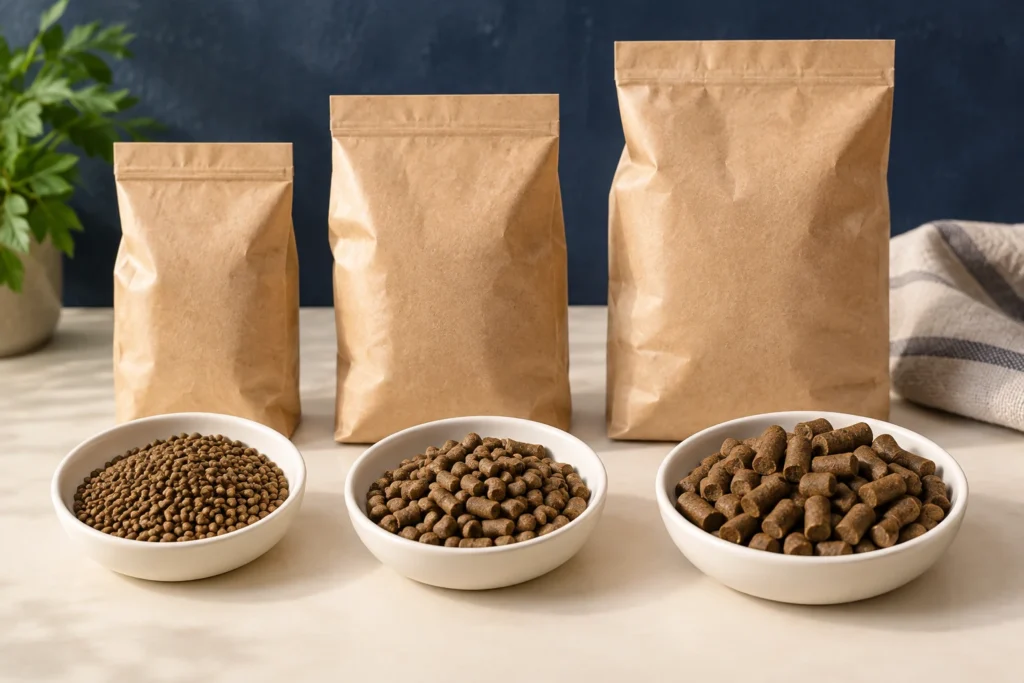
Ask for the stated pellet diameter and any available information about length and size variation. Diameter alone does not describe the whole physical form. A representative sample helps the farm assess whether pellets can be handled by its feeding equipment and consumed appropriately by the target stock.
Alami Trade’s Finisher 1 product page lists a feed size and fish-weight range alongside composition information. Use those details as a starting point for an enquiry, then request the current label and confirm suitability for your own species and farming conditions. A catalogue range should not be treated as a universal feeding recommendation.
Check physical condition as well as nominal size
Look for excessive dust, broken pellets and uneven dimensions in a representative sample. Record how the sample was packed and transported, since rough handling can affect its condition. If physical durability is important to your operation, ask which test method and acceptance criteria the supplier uses.
Clarify whether the product is intended to float, sink slowly or sink, and ask how that behaviour is assessed. Do not infer buoyancy simply from the word “extruded”. Manufacturing conditions and formulation influence the finished feed, so confirm the characteristic of the specific product being offered.
Read the composition on a consistent basis
Request a complete current specification rather than one headline nutrient value. Review protein, fat, fibre, moisture and other relevant parameters with the farm’s adviser. Where energy values or particular fatty acids are listed, ask for their units, reporting basis and any explanation needed to interpret them.
Comparisons become misleading when one result is reported on an as-fed basis and another on a dry-matter basis. Confirm which basis each document uses before ranking products. Also distinguish guaranteed limits from typical values and batch test results. They answer different questions and should not be placed in one comparison column without explanation.
Higher crude protein is not automatically a better purchasing outcome. Suitability depends on the overall diet and the intended stock. Ask the technical reviewer to assess the specification as a whole, including any ingredient constraints relevant to the farm or destination market.
Connect the sample to the commercial batch
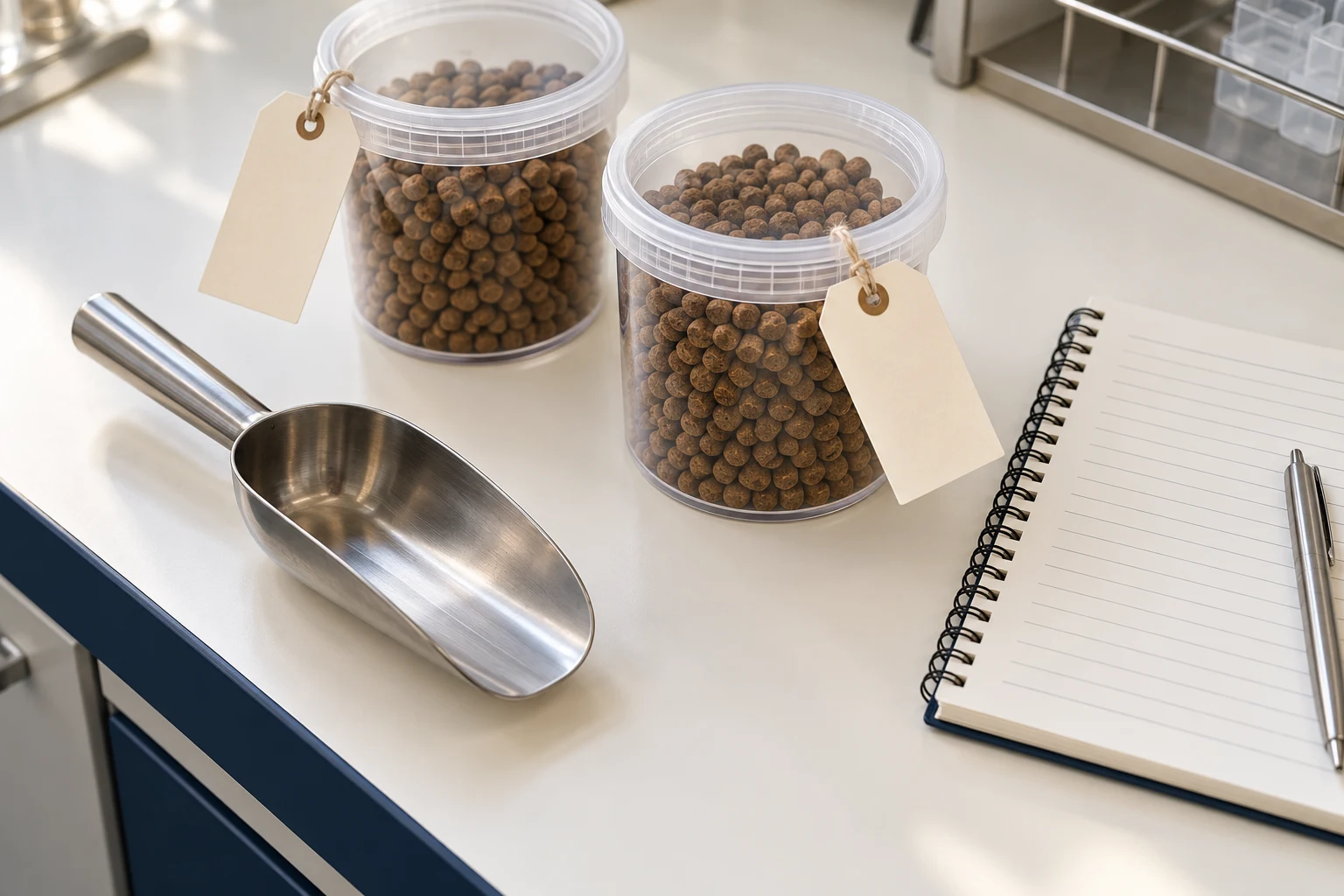
A good sample is useful only when its relationship to the delivered product is clear. Ask whether it comes from routine production, a particular batch or a development run. Record its product code, production date and batch number where available, then keep those details with your evaluation notes.
Agree what must remain consistent between sample approval and shipment. This may include product identity, pellet size, packaging and specified composition limits. Ask the supplier to notify you of a formulation or manufacturing change that could affect the agreed specification before dispatch.
For larger purchases, define the sampling and inspection arrangements in advance. Who takes the samples, how are they identified and who receives them? If independent testing is required, agree the laboratory, test scope and handling instructions with the relevant specialists. An unlabelled bag sent informally cannot provide the same traceability as a documented sample.
Review quality evidence without overinterpreting it
Ask for the documents relevant to the feed and your purchasing criteria. A product specification describes intended characteristics; a certificate of analysis reports results for an identified sample or batch. Check the product name, batch reference, dates and test methods so you know what the document actually covers.
Verify any certification claim with its issuer or supporting documentation. A company certificate does not necessarily certify every product characteristic, and a test report does not establish performance on every farm. Where evidence is missing, record the question as unresolved instead of filling the gap with an assumption.
Be particularly careful with performance promises. Feed conversion and growth depend on more than feed alone, including stock, husbandry and environmental conditions. Use a properly planned farm evaluation to assess suitability under your own operating conditions rather than treating a promotional statement as a guaranteed result.
Plan storage before deciding order volume
Request the manufacturer’s storage instructions and shelf-life information for the specific feed. Ask how much remaining shelf life is expected at dispatch and at arrival. The useful period after delivery matters more to the farm than the full period stated from manufacture.
Review the warehouse’s ability to protect bags from moisture, pests, contamination and physical damage. Keep stock identifiable and arrange rotation so earlier-expiring material can be used appropriately. Follow the manufacturer’s limits rather than applying a generic storage period from another feed.
A lower price for a larger order can be unattractive if the farm cannot use or store the quantity properly. Estimate consumption, shipping time and a realistic buffer, then check the result against available storage capacity. Include any anticipated seasonal changes in demand in the discussion.
Specify bags, pallets and receiving checks
Confirm bag weight, material, closure and labelling. Ask whether bags will be palletised and how they will be protected during handling and transport. Obtain the proposed net and gross weights and package dimensions before finalising freight arrangements.
Require the label and batch identification to remain readable through the distribution chain. If your warehouse breaks pallets into smaller deliveries, individual bags still need enough identification to connect them with the relevant records. Agree how mixed batches will be separated and recorded.
At receipt, compare the product code, quantity, batch information and visible condition with the order. Photograph damage before moving or opening affected packages when practical. Isolate suspect material and seek a documented assessment; appearance alone should not be used to declare questionable feed acceptable.
Compare the complete commercial offer
Ask for the price unit, minimum quantity, packaging basis, quotation validity and delivery scope. A price per tonne must be clearly identified as a metric tonne of net feed if that is the intended basis. Confirm whether pallets, testing, inspection and special documents are included.
Separate product readiness from transport time. A feed may be available quickly but still require document review and suitable shipping arrangements. The destination, product composition and parties involved can affect the checks required before a shipment proceeds, so confirm those requirements early.
Review the available agricultural product listings to identify relevant product references, then submit the technical brief through Alami Trade’s enquiry page. Include your stock, system, quantity and destination so the response can address the actual buying decision.
Use a documented trial and reorder process
Before introducing a new feed, agree an evaluation plan with the farm’s technical team. Define the comparison period, observations and records that will be used. Keep changes in management and environmental conditions visible so the results are not attributed to feed alone.
Record the product and batch used, the amount supplied and relevant production observations. If a problem appears, preserve the supporting records and contact the supplier promptly. A structured account of what happened is more useful than a general statement that the feed performed differently.
For repeat orders, refer to the approved specification version and require confirmation of any changes. Familiar packaging does not prove that every detail is unchanged. A short reorder review covering composition, batch dates, packaging and delivery terms helps maintain consistency without repeating the entire initial qualification process.
Frequently Asked Questions
Can I choose feed using protein percentage alone?
No. Review the complete specification, species, growth stage and farming conditions with a qualified adviser. Protein percentage is one part of the assessment, not a complete diet recommendation.
Should every shipment have the same batch number?
Not necessarily. Larger orders may contain multiple batches. Ask for clear identification, the relevant documents for each batch and a packing arrangement that keeps them traceable.
What should I do if bags arrive damp or damaged?
Document the condition, separate affected material and notify the supplier and relevant transport party promptly. Obtain a technical assessment before deciding whether the feed can be used.
Is the cheapest feed always the lowest-cost option?
No. Compare suitability, handling, usable shelf life and the complete delivered scope. Evaluate farm results with appropriate records rather than assuming that bag price determines production cost.
Conclusion
Aquaculture feed purchasing works best when the farm requirement, physical feed characteristics, quality evidence and storage plan are reviewed together. Use a clear specification, traceable samples and a documented receiving process to make the commercial order support the farm’s actual needs.